30 June 2026 09:30 - 17:00 Burlington House, Piccadilly, London, W1J 0BG and virtual
30 June 2026 | 09:30 - 17:00 | Burlington House, Piccadilly, London, W1J 0BG and virtual
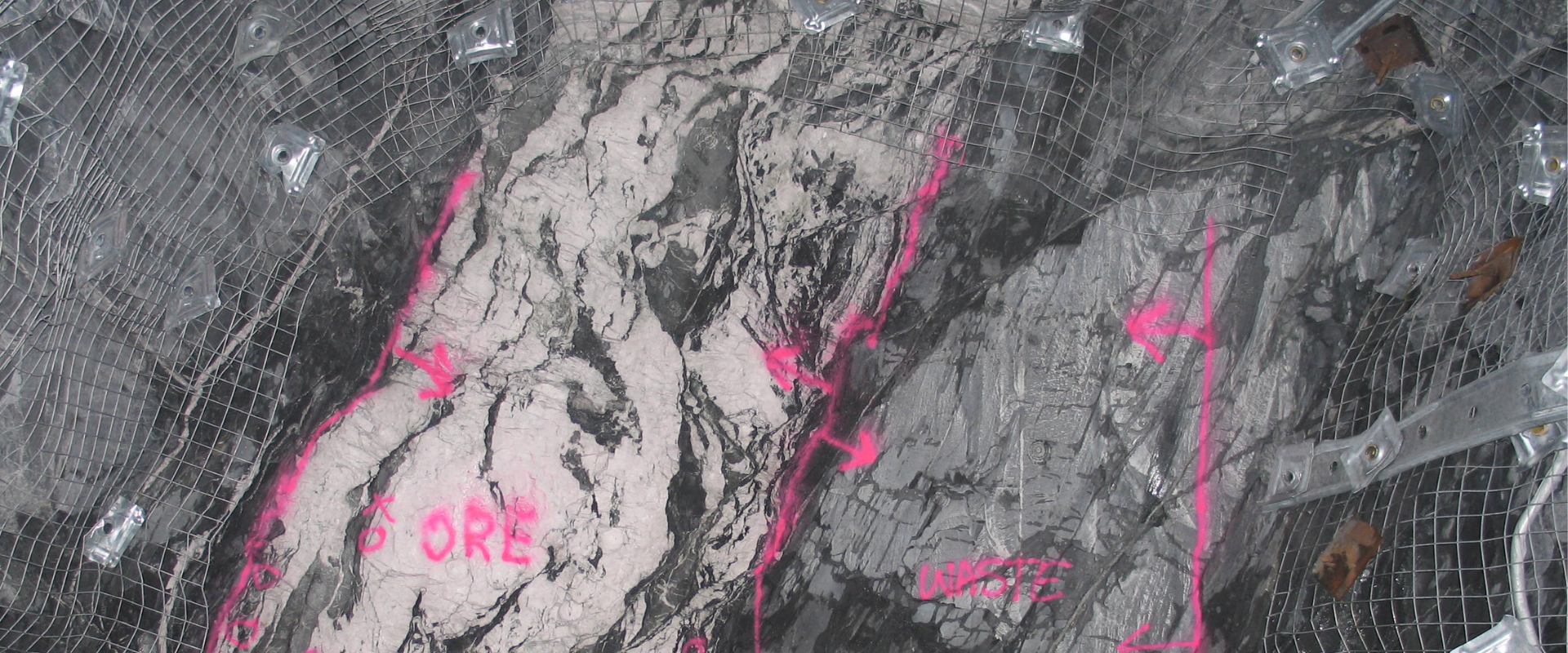
MRE26 will bring together geoscientists and other professionals to discuss the status and future of resource evaluation. Topics will showcase leading practice and advancements in sampling/QAQC; geological modelling; geostatistical estimation and simulation; inputs into reasonable prospects for economic extraction; project risk analysis; grade control and reconciliation; and resource reporting.
It will promote the exchange of information through a series of Keynote presentations and networking during the day.
The meeting will be run in collaboration with the Camborne School of Mines, University of Exeter.
-
How do we collect and maintain representative samples across the mine value chain?
-
Limitations of current estimation techniques.
-
Learning from past failures to improve future practice.
-
How do we ensure estimates are clearly and accurately communicated to end-users?
-
Considerations of reasonable prospects for (eventual) economic extraction - driving open and honest practice.
-
Quantifying and communicating variability in resource models
-
International reporting standards.
-
Artificial intelligence and machine learning.
The Conference will be of interest to all those who work on Mineral Resource Evaluation across the mine value chain. It will be relevant to practice in the following domains: exploration geology, resource development, resource estimation/geostatistics, and mining/production geology. Those that work across industry, consulting and academic sectors are encouraged to attend.
- Dr. Simon Dominy - Camborne School of Mines, University of Exeter
- Prof. Hylke Glass - Camborne School of Mines, University of Exeter
- Prof. Julian Ortiz - Camborne School of Mines, University of Exeter
The depletion trap: why we must rethink the resource development pipeline
Update & future of reporting in context of CRIRSCO

Edmund (Ed) Sides is a resource geologist who graduated in Geology from Trinity College Dublin, Ireland and subsequently obtained MSc and PhD degrees from Imperial College, London. For most of his forty-year career he has worked in the mining industry, in exploration, resource estimation, education and training and consulting.
He has been a member of the Pan-European Reserves and Resources Reporting Committee (PERC) since 2014 and one of PERC’s two representatives on the Committee for Mineral Reserves International Reporting Standards (CRIRSCO) since 2018. He has been a member of the CRIRSCO Executive since 2024, and he is the current Chairperson of CRIRSCO.
Materiality Judgements in Resource Geology

Frank is a Chartered geologist with over 14 years’ experience in the metalliferous mining sector, supported by postgraduate qualifications in Mining Geology and Geostatistics. Before entering consulting, he developed a strong foundation of operational experience across exploration, project development and mining, including five years in Australia working on AngloGold Ashanti’s Sunrise Dam Gold Mine and Laverton District development projects. At SLR, he works across a range of geological settings, commodities and project types, specialising in mineral exploration, geological modelling, Mineral Resource estimation, audits and technical due diligence.
Geostatistics and GIS: horses for courses

Prof. Hylke J. Glass is Professor of Mining and Minerals Engineering at the Camborne School of Mines, University of Exeter, a role he has held since 2001. His research focuses on integrated mining and minerals extraction, including geometallurgy, digital twins, block caving, sensor‑based preconcentration, tailings reprocessing, geothermal resources and energy storage. He leads multiple major UK and EU‑funded projects, lectures extensively on resource modelling and mineral processing, and serves as Chair of IOM3’s Mineral Processing and Extractive Metallurgy Board.
Value of information, orebody knowledge and AI

James Cleverley is Operations Manager – Minerals (Europe) at IMDEX, with over two decades of experience spanning academia, government research and mining technology. He holds a PhD in geoscience and has published extensively in hydrothermal geochemistry, data analytics and geological characterisation. James works at the intersection of geology, geochemistry and digital workflows, focusing on improving data quality, integration and confidence across the exploration and resource definition cycle. His current work centres on helping clients apply connected sensing, geoscience analytics and integrated digital workflows to make more informed, defensible decisions throughout geological interpretation and mineral resource estimation.
Core scanning - now & future; implementation and change management

James Shreeve has been working with Geotek for the last nine years starting as the Geoscience Team Leader and now as the Sales and Marketing Director of the business. James is a Geologist by background and holds a MRes degree in Marine Geology and Geophysics. James started his career as an Engineering Geologist working predominantly on offshore Geohazards for Oil and Gas field developments where he was introduced to Geotek and core scanning technology employing it on several of his projects. Since then James has technically led numerous geological studies, production of geological models and core logging projects around the world, and now using these experiences to develop new technology and business for Geotek.
Understanding sources of risk in mineral reserves

Prof. Julian Ortiz is a Mining Engineering (Universidad de Chile) and Ph.D. in Geostatistics (University of Alberta). He is a registered Competent Person (Chile). Dr. Ortiz has led a successful academic career at Universidad de Chile and Queen’s University (Canada). In 2024 he joined CSM – University of Exeter as the Mark Cutifani / Anglo American Chair in Mining Innovation. He has also worked as an entrepreneur and consultant for over 25 years. He is the co-founder and CEO of Annapurna Suite, a Canadian technology company that provides SaaS automating and streamlining resource modeling with cutting edge cloud technology.
The Competent Person and Historical Data – Limitations and Pitfalls

Mark Burnett, Principal Geologist. Mark has over 30 years of experience in the mining industry. Mark is one of PERCs representatives on CRIRSCO and is currently participating in the PERC Geothermal lithium brines working group, the UNRMS Life Cycle Accountability Framework Expert Working Group and the UNTF-CETM TC-AR2 Expert Working Group.
An automated approach to the Heterogeneity Test for sampling protocol optimisation

Dr. Simon Dominy is a mining geologist-engineer with 30 years of international experience in consulting, academia, and underground operational roles. He specialises in the evaluation of high-nugget effect deposits (particularly gold and tin); geometallurgy; sampling/Theory of Sampling; resource development; resource/reserve estimation; and operations management. His academic contributions include over 100 peer-reviewed publications and regular involvement in teaching and research at CSM. He serves as a technical advisor to several resource development companies, and sits on the PERC Reporting Standard Committee. In 2022, he received the Pierre M. Gy Sampling Gold Medal.
Gold Sponsor

Established in 1998, Geodrill is a leading exploration drilling company with 102 drilling rigs, 84 Surface and 18 Underground rigs (including 17 LM rigs and 1 Sandvik DU 431). The Company currently operates in Ghana, Cote d’Ivoire and Senegal, Egypt in North Africa and Peru and Chile in South America. Geodrill provides Reverse Circulation, Diamond Core, Deep Directional Navi Drilling, AirCore, Grade Control, Geo-Tech and Water Borehole to major, intermediate and junior mining companies, striving to be the preferred drilling partner, providing safe, cost-effective drilling services with minimal environmental impact and rapidly responding to clients’ needs to meet their project goals.
Silver Sponsor

Drinks Reception sponsor

Showcase your commitment to advancing cutting-edge science, align with sustainable energy transition goals and bolster your Environmental, Social and Governance (ESG) commitments. We understand that each organisation has unique objectives, and we welcome the opportunity to tailor bespoke packages to meet your specific needs.
For more information, please get in touch: sponsorship@geolsoc.org.uk
In-Person fees
Fellow £145
Non-Fellow £275
Student Member £30
Student Non-Member £50
Fellow (Speaker) £140
Non-Fellow (Speaker) £200
Retired Fellow £150
Virtual fees
Fellow £55
Non-Fellow £85
Student Member £0
Student Non-Member £25
Fellow (Speaker) £50
Non-Fellow (Speaker) £70
Retired Fellow £50
Corporate Patron discounts
We offer discounted rates for employee of companies that are part of our Corporate Patron programme, please email conference@geolsoc.org.uk for more information.
Group discounts
5–9 delegates: 10% off
10–14 delegates: 15% off
15 delegates or more: 20% off
Please contact conference@geolsoc.org.uk for any group bookings.
We offer discounted rates for those in developing countries. Please email conference@geolsoc.org.uk for more information